Brain Science is Advancing. So Why are Autism Trials Still Failing?
Many autism drug trials have failed, but the problem isn't always the science behind the drugs themselves. Often, it's in how the trials are designed. SPARK NS spoke with Paul Wang, MD, about what is needed to improve clinical trial design.
Before launching a clinical trial, researchers must decide how to measure success. This choice is called endpoint selection. In autism research, that decision is not always straightforward.
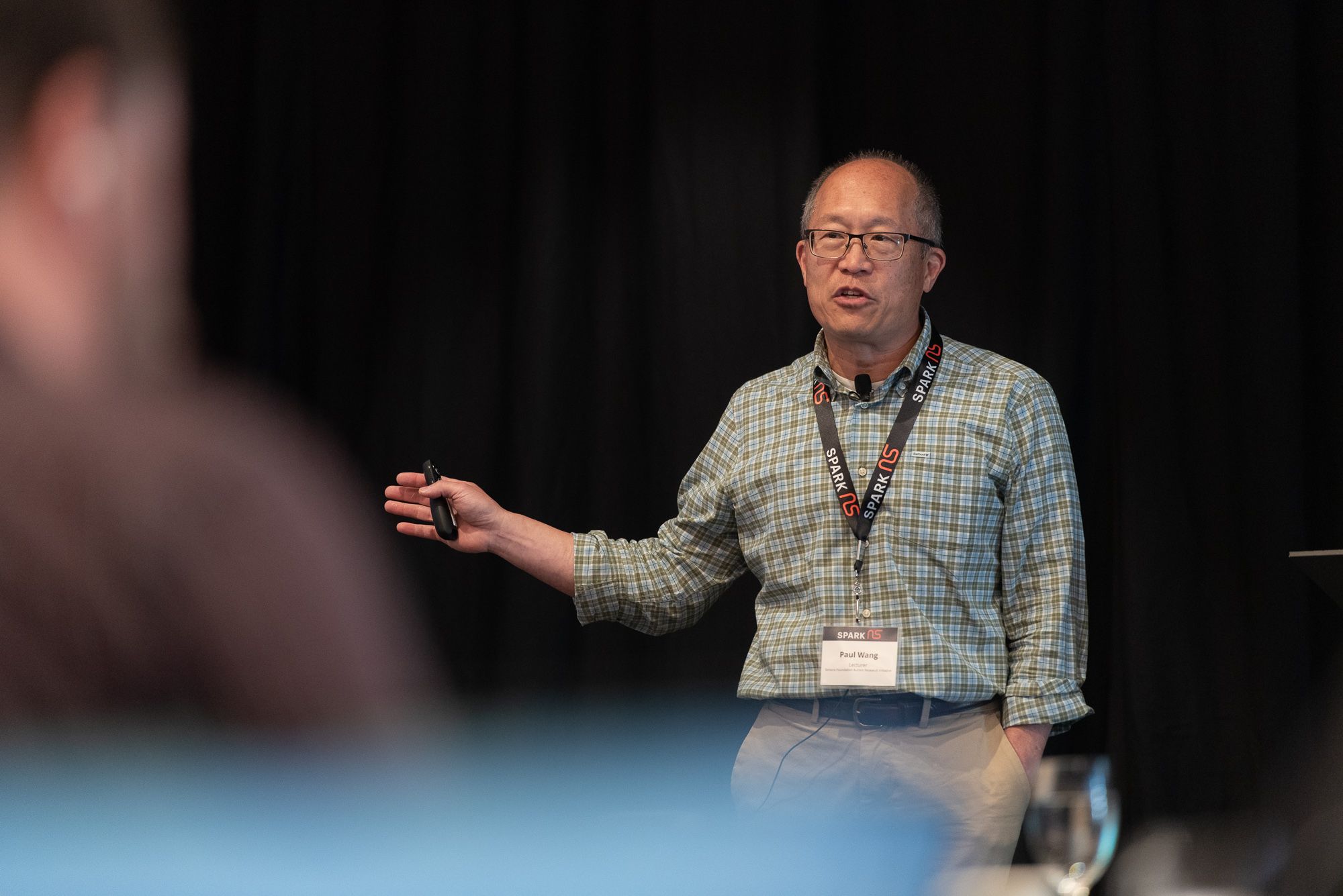
To explore how this choice shapes clinical trial outcomes and what the field needs to move forward, SPARK NS spoke with Paul Wang, MD, a developmental-behavioral pediatrician and leading expert in autism drug development. At the Children’s Hospital of Philadelphia, Dr. Wang worked with autistic children and children with intellectual disabilities and studied language and memory development. In 2002, he left academia for industry, where he worked at Pfizer and Seaside Therapeutics, leading clinical trial design and oversight. Since 2013, Dr. Wang has worked in the nonprofit and advocacy sector, first at Autism Speaks and then at the Simons Foundation. He has been with the Simons Foundation since 2016 and currently serves as Senior Scientific Director for Simons Foundation Autism Research Initiative (SFARI) Pharmaceutical and Biotech Relations.
Disclaimer: This interview has been edited for length and clarity.
Q. What is the current state of the design and development of clinical trials for autism treatments?
A. Autism clinical trials for therapeutics are still in their infancy compared to established fields like depression or schizophrenia research. Behavioral and psychoeducational interventions have a longer track record; these clearly help people improve specific skills, but the evidence doesn't convincingly show that these interventions help improve social communication and interaction challenges associated with autism.
We don't have any FDA-approved drugs for the core autism symptoms—challenges in socialization, communication, repetitive behaviors, and sensory processing—so there's no precedent for what a study design should even look like.
Q. Are there agreed-upon clinical endpoints or biomarkers?
A.There's general agreement on which available measures are better, but we don't have a great measure yet, and crucially, the FDA hasn't officially endorsed any specific endpoint.
The challenge is that some diagnostic scales were designed as a binary yes/no tool for diagnosis, not to capture subtle symptom changes. Newer measures, such as the Social Responsiveness Scale (SRS) and the Childhood Autism Rating Scale (CARS), are more sensitive to nuance, but these scales can be affected by factors that are not specific to autism, such as intellectual or language disabilities. So far, no drug has shown statistically reliable and clinically meaningful change on any of these scales.
What we really need are biomarkers. In other conditions, you have reliable biological measures of disease state and responses to medical treatments, such as cholesterol for heart disease risk or hemoglobin A1c for diabetes. Those biomarkers are easy to run, relatively inexpensive, and reliably measured across different laboratories. For autism, researchers have explored candidates like eye gaze, where we track whether someone is looking at the eyes, mouth, or avoiding the face entirely. It is well-documented that eye gaze patterns differ in autism, but there's substantial overlap between autistic and non-autistic populations, even though the group averages differ. That's nothing like diabetes, where hemoglobin A1c gives you a clear diagnostic cutoff with no overlap. Also, nobody has ever shown that improving eye gaze in the lab correlates with real-world social improvement. It's a biomarker that detects a difference, but it doesn't tell us if it matters.
Q. Can you walk me through a real-world example of when endpoint selection impacted success in a clinical trial for autism?
A. When I was at Seaside Therapeutics, we ran a clinical study on a drug called arbaclofen, but it was unsuccessful. The FDA requires you to designate a primary endpoint before unblinding the data. They expect to see statistically significant results on that one measure. The primary endpoint selected for the Seaside study didn't hit, but our secondary endpoint showed a much more robust drug effect. However, it didn’t matter because the primary endpoint failed, so the trial was dead from an FDA standpoint.
The Simons Foundation then acquired the rights to arbaclofen, and we ended up working with academics in Canada and the EU to run two independent clinical trials. Along with some other modifications to the study protocol, they flipped the primary and secondary endpoints used in the Seaside study—but then the results flipped. Same drug, similar protocols, different primary endpoints, but opposite outcomes. This illustrates how demonstrating efficacy convincingly can be time-consuming and challenging when relying on weak endpoints.
Q. How have recent trial failures shaped the direction of the field?
A.These endpoint challenges have had real consequences. We've had multiple high-profile failures: the Seaside trial with arbaclofen, a large NIMH-sponsored academic trial of oxytocin with 300 subjects, and several major industry programs. Roche, for example, ran two trials of balovaptan, a drug that targets the vasopressin system, which plays a role in social behavior. One trial enrolled older individuals and the other younger individuals, but both failed. The pharmaceutical company Servier tested bumetanide, a drug that modulates chloride transportin the brain, thereby restoring inhibitory signaling, with the idea that this could have a calming effect. That failed too.
The net result of these failures is that they’ve shifted how the entire industry views autism. The industry has become really shy about autism. Companies have pulled back significantly, particularly Roche, which had invested heavily. That's precisely why initiatives like the SPARK NS program matter so much.
From all this there's been a broad recognition across the field that we need better endpoints. Nobody disagrees on that point. The challenge is we don't yet know exactly what those will be.
Q. What role do caregivers and patients play in shaping clinical trial design in autism?
A. Members of the autism community play an important role in the planning and design of clinical trials, especially when it comes to logistics. Having a child with autism, or being autistic yourself, creates real day-to-day challenges, and trials add burden on top of that. We need to understand how to make participation accessible and manageable—minimize visits, blood draws, and visit length. Give people advance notice of what to expect so they can mentally prepare.
The community also shapes what we measure and what outcomes matter. Autism is a broad spectrum. Some people experience significant disability; others don't feel they need treatment at all. This can lead to controversy from some parts of the autism community. There's a vocal part of the autism community saying, "I'm neurodivergent. I'm fine with my autism. I just need accommodations, not drugs or brain interventions."
Yet there's one area where I see much broader agreement across the spectrum: sensory processing differences. Even high-functioning autistic individuals with PhDs or law degrees, people not seeking help with communication or socialization, often desperately want support with aversive sensory experiences. That's driving scientists to focus on the sensory dimension. It's a newer endpoint that people really haven't pursued in trials before. And it's something almost everybody agrees matters.
…………………………
Dr. Wang also serves as an advisor to SPARK NS, helping guide our work to advance promising neuroscience discoveries toward patients. We currently support six projects focused on developing treatments for autism with more to come in future projects selected for the SPARK NS Translational Research Program. We are committed to accelerating research in this area.
Learn more about our ongoing projects here.
…………………………
Learn more
- Learn more about SPARK NS