IP Basics: The Risks of Sharing Discoveries Too Soon
New breakthroughs are exciting, but it is important to understand potential consequences of premature disclosure before filing a patent.
In academia, professional advancement often depends on sharing discoveries. Researchers are encouraged—and rewarded—for publishing their findings in journals, presenting at conferences, and engaging in open communication with colleagues. These practices are essential to scientific progress, but when a discovery has therapeutic or commercial potential, unguarded disclosure can pose serious risks to the future of a drug development program.
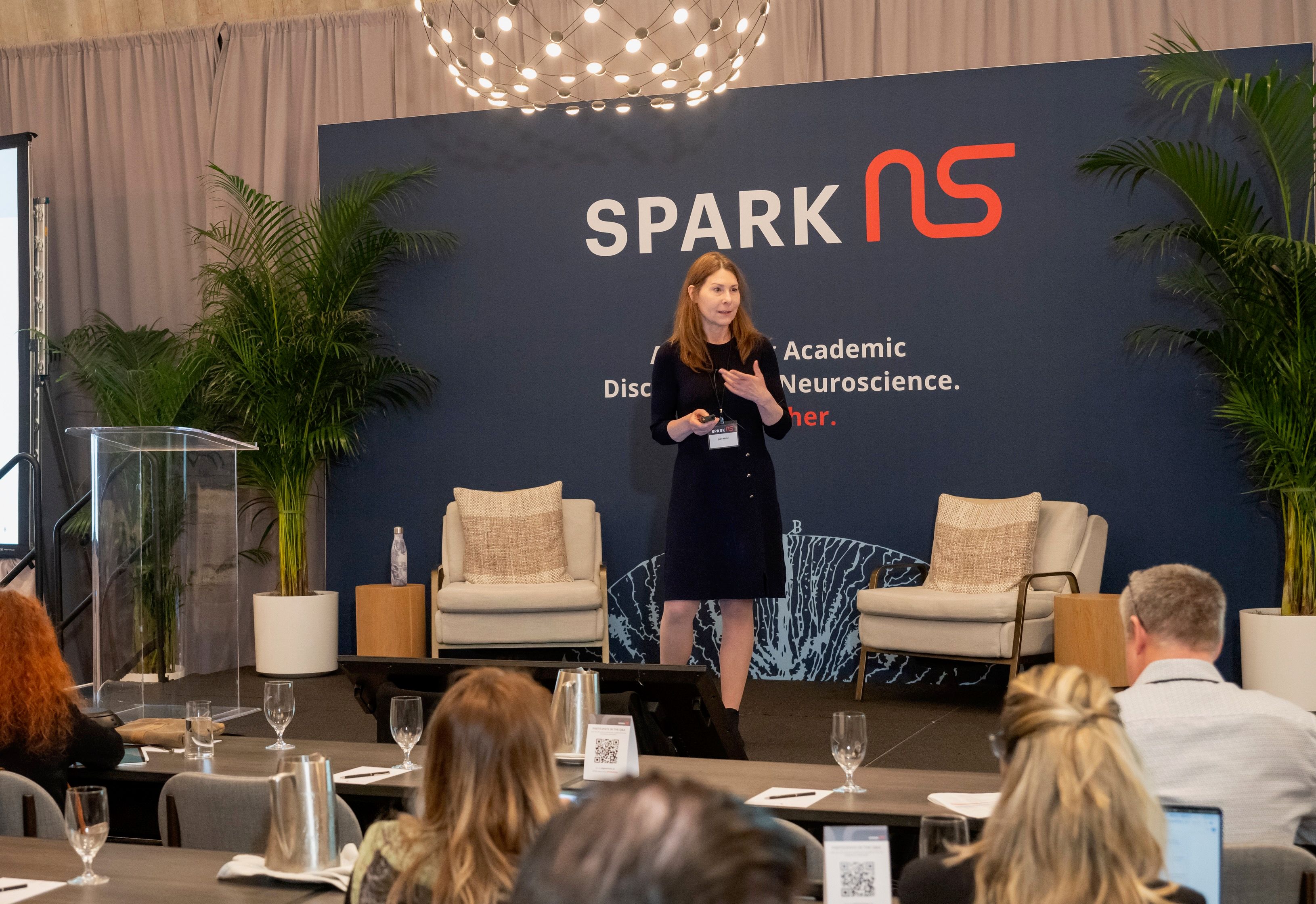
“You must file your patent application before any of these events occur,” cautioned Judy Mohr, JD, PhD, a partner at the global law firm McDermott Will & Emery and an advisor to SPARK NS. “Otherwise, you have the novelty problem: your own disclosure is novelty-destroying to your own invention.”
Dr. Mohr discussed intellectual property (IP) at a recent SPARK NS meeting of principal investigators participating in the SPARK NS Translational Research Program.
Patent law requires that an invention be novel to be eligible for protection. Novelty means the invention has not been made publicly available prior to the patent filing date. Any public disclosure—whether through a journal article, poster session, or oral presentation in a non-confidential forum—can be considered prior art. Prior art is essentially any information that becomes publicly accessible before the filing date of a patent application on the invention and can be used to challenge the novelty of the patent application. Even the inventor’s own publication can work against them, rendering their discovery ineligible for patent protection.
In the biotechnology and pharmaceutical industries, patents form the backbone of innovation. They safeguard IP across health and medicine—covering everything from diagnostics and medical devices to medicines and engineering technologies. A granted patent confers 20 years of market exclusivity, creating the financial security needed for companies to recoup the extraordinary costs of drug development programs. Bottom line, without patent protection and exclusivity, commercial entities are unlikely to invest the time, money, and expertise required to bring a promising discovery to patients.
This is particularly critical for therapeutic discoveries. Academic teams may be motivated to share breakthroughs as soon as possible, but without a coordinated patent strategy, those breakthroughs may never advance into viable treatments. By contrast, filing for protection before disclosure preserves the ability to both publish and commercialize—maximizing the impact of the research.
Dr. Mohr noted, “There is an exception in the United States for this. If you disclose you have 12 months to file.
”However, this grace period is not universally recognized around the world. Many jurisdictions, including Germany, the UK, and France, require absolute novelty—meaning that any disclosure before filing can bar patentability entirely. “Because pharmaceuticals are a worldwide market and you’re looking for investment from collaborators that have an eye on the world, having a patent only in the US… is going to undermine your ability to move your project forward and get investment,” she said.
Given that pharmaceutical and biotech products are inherently global markets, limiting protection to the US severely undermines a technology’s value. An invention without international protection may be commercially unviable, even if it is technically patentable in the US. For researchers aiming to see their discoveries translated into worldwide therapies, planning patent filings before disclosure is essential.
Best Practices for Researchers
To strike a balance between scientific openness and patent protection, researchers can adopt several best practices:
- Engage early with your institution’s technology transfer office. They can help assess patent potential, coordinate filings, and align patent strategy with research goals.
- Plan publications and conference presentations around patent filing timelines. A brief delay in disclosure may make the difference between a viable patent and lost protection.
- Understand jurisdictional differences. If a discovery has global potential, prepare for international filing requirements that do not allow grace periods.
- Communicate with collaborators. Make sure everyone involved understands the importance of confidentiality before filing.
Patents are ultimately what allow academic discoveries to become real-world therapies. Securing protection before disclosure gives them the best chance of driving real-world impact.
In the fast-moving world of biotech and pharma, where innovation carries high costs and higher stakes, filing before disclosure is not just good practice—it is essential.
Learn More
- Learn more about SPARK NS