Kathy Steece-Collier, PhD: A Personal Mission to Treat Parkinson’s
After decades of studying Parkinson’s disease, a personal loss brought new meaning to Kathy Steece-Collier’s work. Now, with support from SPARK NS, she is working to advance a promising gene therapy toward clinical trials.
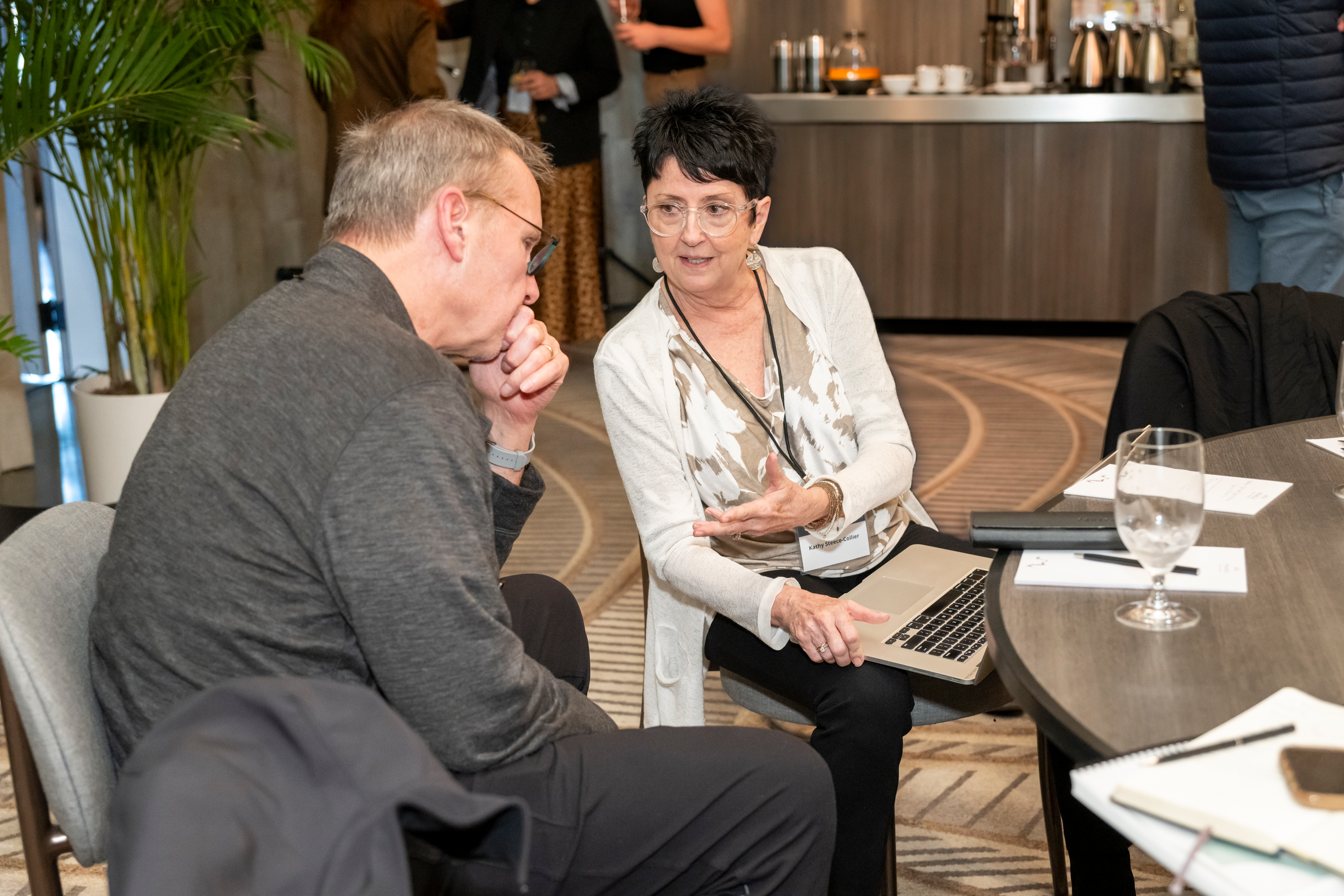
For Kathy Steece-Collier, PhD, developing more effective treatments for patients with Parkinson’s disease is both a scientific challenge and a deeply personal mission.
“My father lost his battle to Parkinson’s earlier this year and I have another family member living with the disease,” said Dr. Steece-Collier.“ Watching what they and so many others with Parkinson’s have gone through is heartbreaking.”
A professor in the Department of Translational Neuroscience at Michigan State University College of Human Medicine, Dr. Steece-Collier is a principal investigator participating in the SPARK NS Translational Research Program. She and her team are developing an experimental gene therapy designed to silence a specific calcium channel in the brain, known as CaV1.3, with the goal of slowing Parkinson’s disease progression while also preventing involuntary movements caused by levodopa, a commonly prescribed Parkinson’s medication.
But her journey into Parkinson’s research began decades ago with a career path that was anything but straightforward.
A Scientist Looking to Make a Difference
Dr. Steece-Collier initially enrolled in college to study elementary education, with a minor in science, but changed her major to biology and chemistry during her first semester. Encouraged by her academic advisor, a professor whom she proudly describes as having been part of the research team associated with the Nobel Prize-winning discovery of vitamin K, she decided to pursue graduate studies.
But during graduate school, she began questioning her decision.
“I was studying basic neurochemistry, but there was something missing,” she said. “I wanted to help patients more directly.”
She considered going to medical school but ultimately decided to pursue a postdoctoral fellowship in translational research. That decision led her to a laboratory investigating whether transplanting dopamine-producing neurons into the brain could replace those lost to Parkinson’s disease. At the time, researchers had high hopes for this approach.
“The first meeting I went to, I remember leaders in the field saying we were going to have to find another disease to study since it looked like this therapeutic was going to ‘cure PD,’” she said.
But the reality proved more complicated. While some patients benefited from the transplants, others experienced little improvement, and some developed severe involuntary movements known as graft-induced dyskinesias. The treatment did not deliver the cure researchers had hoped for.
Although the approach fell short of its initial promise, Dr. Steece-Collier continued studying it to better understand the possibilities and limitations of repairing the brain.
Decades later, the challenge of finding more effective treatments for Parkinson’s remains. Levodopa, the most widely used medication for managing motor symptoms, is a good example. As the disease progresses, its effects can become less predictable, and some patients develop debilitating involuntary movements as a side effect of the treatment.
A Discovery With Unexpected Potential
To help prevent these medication-induced movements, known as levodopa-induced dyskinesias, Dr. Steece-Collier and her team have spent almost a decade developing an experimental gene therapy targeting CaV1.3. This calcium channel plays a role in communication between brain cells. The therapy uses a technique called RNA interference to reduce the production of these channels.
In Parkinson's disease, the loss of dopamine can cause CaV1.3 channels to become overactive, contributing to the loss of connections between brain cells and disrupting normal brain circuits. Dr. Steece-Collier and her team hypothesized that reducing CaV1.3 activity could help prevent the changes associated with dyskinesias.
When the drugs they initially tested proved insufficiently specific or effective, the team decided to explore gene therapy. Dr. Steece-Collier turned to her longtime collaborator, Fredric Manfredsson, PhD, to investigate the use of a viral vector, an engineered virus that can deliver genetic material into cells.
“Dr. Manfredsson has a significant background in developing new gene therapies for neurodegenerative disorders, particularly Parkinson’s disease,” she said. “He developed a non-pathogenic viral vector that enters the striatal and SN [substantia nigra] brain cells, acting like a Trojan horse to bring genetic materials into the cells telling them to silence, or turn down, the production of CaV1.3 channels.”
Dr. Steece-Collier and Dr. Manfredsson have worked together for more than 15 years, exploring how gene therapy could target CaV1.3, which has proven difficult to address with conventional drugs. Their efforts led to unexpected findings.
“We were aiming at simply preventing or perhaps reversing LID [levodopa-induced dyskinesia] behaviors. However, the therapy went way beyond this!” Dr. Steece-Collier said.
In a preclinical study , the therapy improved motor function even without medication, helped preserve the benefits of levodopa, and provided near-complete prevention of the development of levodopa-induced dyskinesias. According to Dr. Steece-Collier, these preclinical findings also suggest that the therapy may have disease-modifying effects, potentially helping injured dopamine-producing neurons regain function rather than simply managing symptoms.
Science Is Only Part of the Journey
When Dr. Steece-Collier was selected for the SPARK NS Translational Research Program in 2025, her team had promising preclinical findings. But navigating the path from the laboratory to clinical trials was unfamiliar territory.
“I knew how to push the research forward in the lab and I knew what next questions we needed to ask in the lab,” she said. “But I didn't know how to take that information and bring it to a place where we could approach the FDA and try and get approval to bring this towards patients.”
Through the SPARK NS Program, Dr. Steece-Collier and her team have gained access to expertise beyond their traditional academic research environment, including regulatory strategy, intellectual property protection, and the business considerations involved in drug development.
“The wealth of information from the business side interacting with the science side has just been really surprising to me,” she said.
Having previously received funding from the National Institutes of Health and other organizations, Dr. Steece-Collier says SPARK NS stands out for its collaborative approach with all members of the SPARK NS teams and ongoing support beyond the traditional exclusive focus on science.
“You can really feel it's a whole team that gives feedback and they're really committed to the success of our projects,” she said.
And for Dr. Steece-Collier, that guidance began even before she joined the Program.
Sometimes the Second Try Changes Everything
The year before Dr. Steece-Collier was selected for the SPARK NS Program, she applied but was unsuccessful. With feedback from SPARK NS team members and advisors, she and her team refined the proposal and applied again the following year. This time, their project, “A Disease Modifying Gene Therapy for Parkinson’s Disease for Multimodal Patient Benefit,” was selected for the 2025 Cohort.
“Being guided and coached to focus on the bigger picture of our therapeutic, instead of just one aspect of it, ended up being very fruitful. The real promise of our therapeutic is that it seems to have disease-modifying efficacy while also preventing levodopa-induced dyskinesias, a common side effect of Parkinson’s treatment,” she said.
What’s Next?
Dr. Steece-Collier and her team now have a clearer understanding of what it will take to move their experimental therapy closer to patients. But there are still important milestones ahead. The treatment remains in preclinical development, with studies to test its safety and efficacy in people still to come. With funding and guidance from SPARK NS, her team has developed a humanized gene therapy agent as they prepare for the next stages of regulatory development.
And behind the complex process of drug development remains the same motivation that once made her question her career as a graduate student: the desire to help people.
With her father's passing from the illness earlier this year, this mission now carries an even deeper personal meaning.
Hear Dr. Steece-Collier discuss the personal motivation behind her research and her experience with SPARK NS in the video below.
Learn more
- Learn more about the SPARK NS Translational Research Program
- Explore the Parkinson’s and autism projects currently in our program