More Than Funding, a Community Focused on Progress
Principal investigators share the difference collaboration can make in advancing discoveries to people with Parkinson’s disease and profound autism.
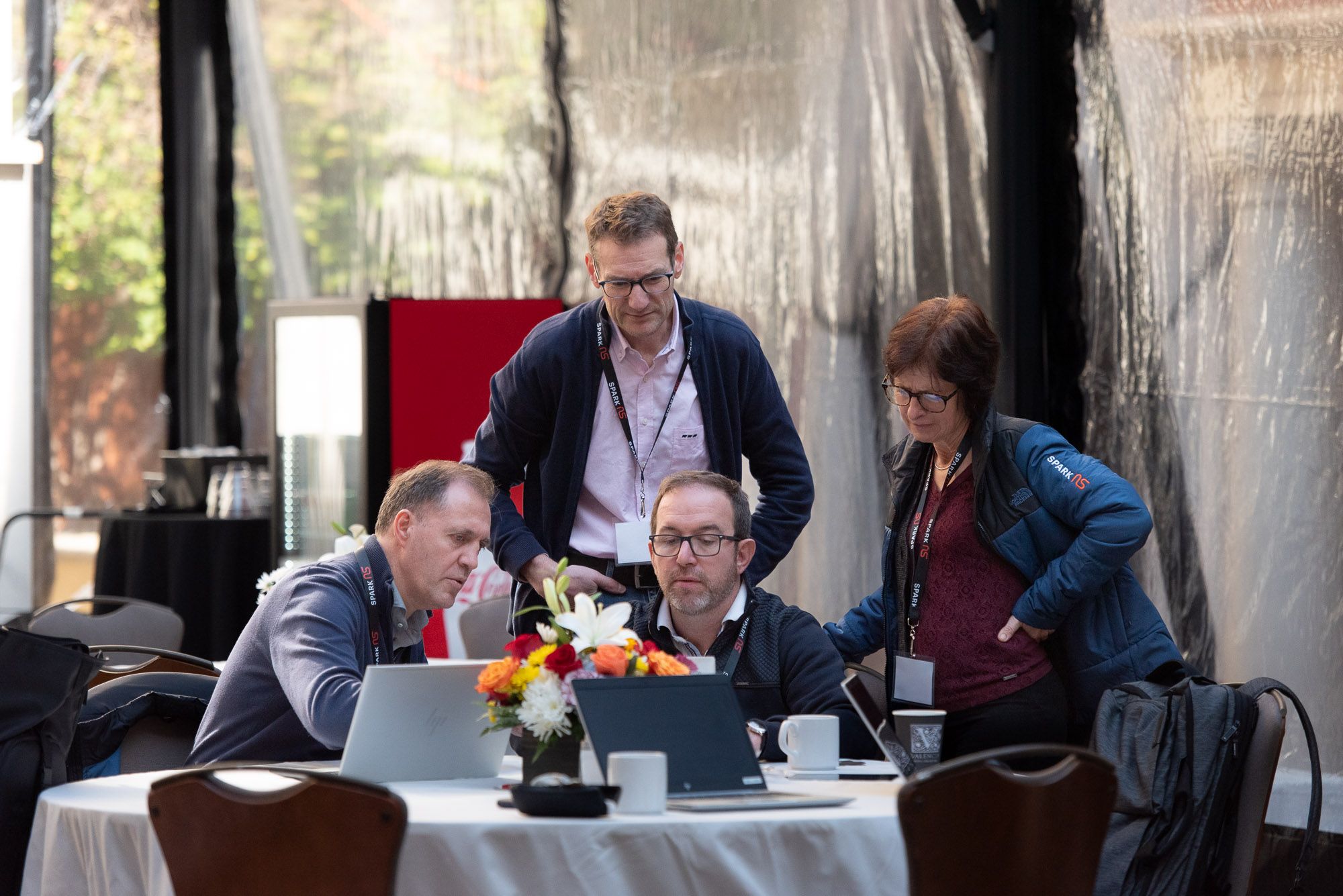
Translating scientific discoveries into therapeutics is one of the greatest challenges facing academic researchers. Success requires not just a technical shift, but also change in mindset.
Participants in the SPARK NS Translational Research Program often describe their experience as being part of a community united by a shared goal. Through close collaboration with advisors, project managers, and fellow investigators, they gain new perspectives on progress—and on their role in advancing treatments for people living with Parkinson’s disease and profound autism.
Principal investigators in the 2026 Cohort recently shared their perspectives on what makes SPARK NS different from traditional funding organizations. Watch the video below to hear directly from them.
Collaboration Fostered by Community
While funding is essential for advancing early-stage discoveries, these principal investigators emphasize that the defining feature of the SPARK NS experience is the program’s strong community.
“SPARK NS is not just different in the sense of the very clear focus on translation,” said Saranna Fanning, PhD, Assistant Professor of Neurology at Harvard Medical School and Brigham and Women’s Hospital. ”It’s also different in the type of support that you get.” “It’s more than funding—it’s a community,” said Michael Johnson, DPhil, FRACP, FRCP, Professor of Neurology and Genomic Medicine in the Department of Brain Sciences at Imperial College London.
Reflecting on this shift, Tobias Boeckers, MD, Professor and Head of the Institute of Anatomy and Cell Biology at Ulm University and Group Leader in Translational Protein Biochemistry, at DZNE, Ulm Site, noted that while academic research is typically shaped by strong team dynamics, it can also involve competition related to publications, funding, and recognition. In contrast, he experiences SPARK NS as an environment where conversations felt consistently focused on helping projects move forward.
Špela Miroševič, PhD, Founding President of the CTNNB1 Foundation has a similar view: “Everybody is there for you to help you progress with the project,” she said.“You can freely speak about your project and discuss the challenges.”
This openness allows teams to test ideas, share uncertainties, and adapt more quickly when new challenges emerges.
From Questions to Defined Milestones
Veerle Baekelandt, PhD, Professor and Head of the Laboratory for Neurobiology and Gene Therapy at KU Leuven, noted that SPARK NS advisors “really try to push you to make your milestones as near as possible, and as precise as possible.”
This approach reflects a clear sense of urgency. “It is laser focused on patients,” said Joseph Buxbaum, PhD, Professor of Psychiatry, Genetics, and Genomic Sciences at the Icahn School of Medicine at Mount Sinai.
Investigators also describe how ongoing discussions with experienced advisors reshape how progress is made toward new therapeutics.
“What’s different about the process here is that it’s ongoing, iterative,” said Antonio Hardan, MD, Professor of Psychiatry and Behavioral Sciences at Stanford Medicine, Stanford University. “Talking to different advisors, they’re going to give you different opinions.”
Confronting the Unknown With Guidance
This constant refinement can feel intense. Yet it also helps teams move forward with greater confidence.
Investigators spoke candidly about discovering gaps in their knowledge and about the value of having access to experienced professionals in the academy and industry who can help them navigate unfamiliar territory.
“You realize that you don’t know what you don’t know. But the expertise here is so deep that you can really find the answers to bring your drug development project to life,” said Dr. Johnson.
For many, this exposure is transformative.
“These are people who have been in the business for a really long time… and that has been unbelievably helpful,” said Joseph R. Mazzulli, PhD, Dimitri Kranic Professor of Neurology at Northwestern University Feinberg School of Medicine. “I feel privileged to receive this advice and to be learning so much.”
A Daily Lesson in Humility
As projects evolve, investigators begin to internalize a new way of approaching scientific questions, one grounded not only in discovery, but in feasibility, risk assessment, and patient impact.
Dr. Johnson described the program as “a perfect combination of hope, optimism, but also a daily lesson in humility.”
Drug development involves uncertainty, persistence, and continuous learning, but also trust, collaboration, and shared purpose.
For principal investigators in the 2026 Cohort, the journey is still unfolding. What is already clear is that translating discoveries into therapies requires more than scientific excellence: it requires a different way of thinking about progress, one grounded in community, iteration, and patient impact.
Learn more
- Learn more about the SPARK NS Translational Research Program and how to apply in the “Call for Proposals” page
- Sign up for updates on the 2027 Cohort of the program and other SPARK NS updates
- Explore the projects and principal investigators currently in the SPARK NS Program
- Hear perspectives on what makes SPARK NS different also from principal investigators in the SPARK NS 2024 and 2025 Cohorts