When Motherhood Meets Science
How three women are transforming personal challenges into scientific progress—and bringing hope to children with neurodevelopmental conditions and their families.
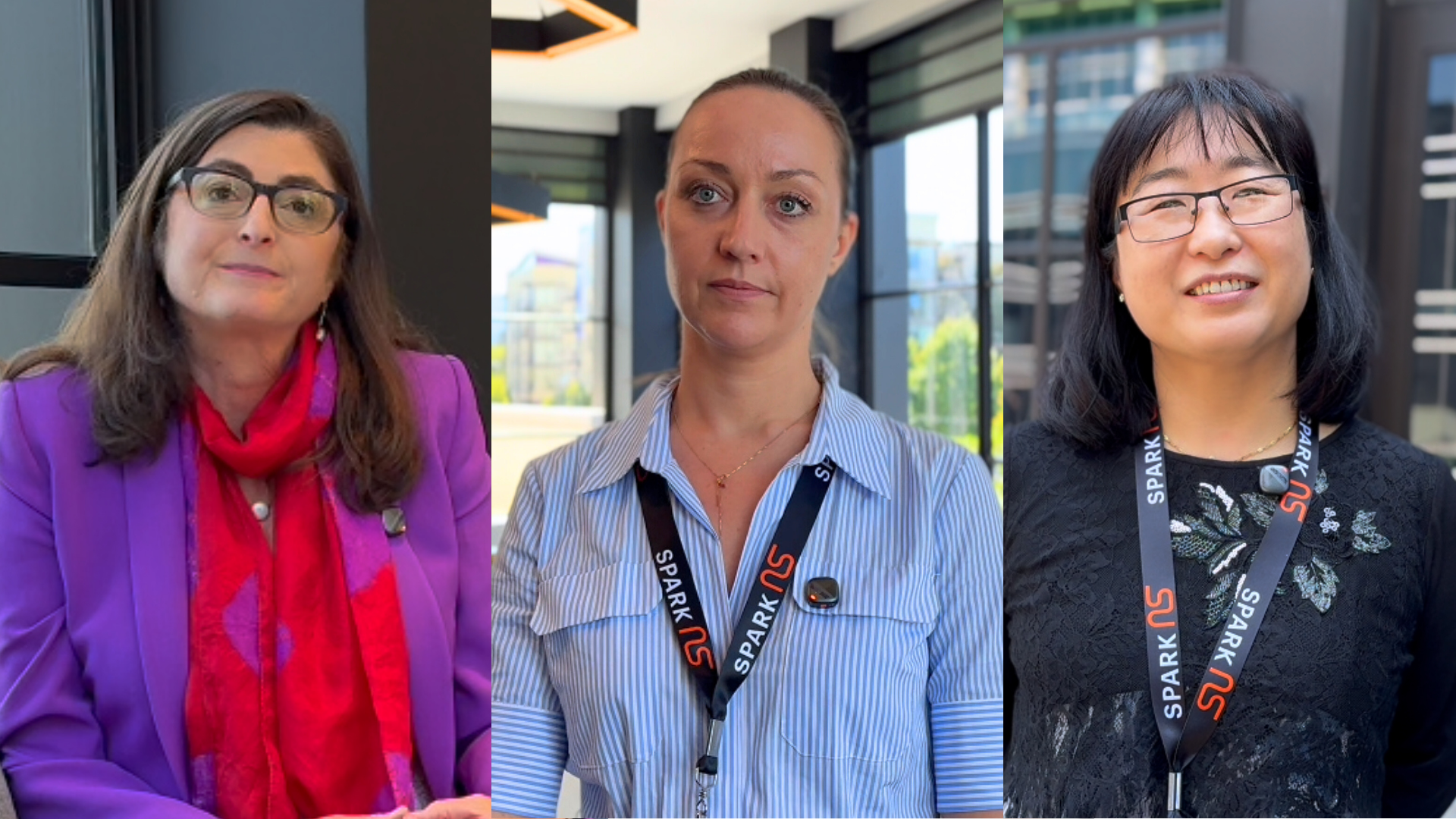
Sometimes knowledge and purpose intersect to drive change where it’s needed most. At a recent SPARK NS short course,”Positioning Autism Discoveries for Successful Drug Development,” attended by 60 researchers from the US, Canada, and Europe, that idea came to life in the stories of three women: Kristin Jacobson, MBA; Špela Miroševič, PhD; and Soo-Kyung Lee, PhD.
All three women are mothers of autistic children or children with related conditions facing immense personal challenges and advancing solutions that could help their families and millions of others around the world. Jacobson is CEO of a healthcare startup, an advocate for changes in autism healthcare policy. Dr. Miroševič is founder and president of the CTNNB1 Foundation, a nonprofit dedicated to improving the lives of children with rare genetic disorders through scientific research. Dr. Lee is an academic researcher developing therapeutics for FOXG1, a neurodevelopmental condition associated with autism.
To hear their voices directly, watch the short video below.
Kristin Jacobson: Keeping the Family Perspective Front and Center
Kristin Jacobson’s life shifted in the span of a single week in 2005: her oldest son was diagnosed with autism (ASD) and her middle son with cerebral palsy. A few years later, her youngest son was diagnosed with ASD. What began as a personal journey quickly became a mission to help other families navigate similar challenges, driving her to focus on patient advocacy and equitable access to autism-related healthcare.
Early on, Jacobson recognized a growing divide in the autism community based on individuals’ experience with it. Some consider autism an identity or personality trait—essentially a difference between people. Others have personal or professional experience with autistic individuals who face profound daily challenges, unable to care for or speak for themselves and in need of therapeutics. Jacobson’s own experience reflects the latter view: “My son was very verbal, but he was also very non-functional. We couldn't leave the house; we couldn't do things that families do.”
Jacobson’s experience fuels her advocacy for greater inclusion of the perspectives of families in autism research, noting that the individuals who need the most support are often left out of studies because of the complexity of their needs. “These are challenging patients,” she said. “They require around-the-clock care and often have minimal or no language. It’s critical that research includes them. When researchers are designing trials, they need to think about how to reach this part of the population.”
She also highlights that in many cases, even small steps can represent major breakthroughs for families. “When a child can finally swallow seizure medication or tolerate an EEG without anesthesia, that’s life-changing progress—even if it doesn’t neatly fit a standardized scale,” said Jacobson.
While holding executive roles across corporate and nonprofit organizations—including the MotionReporter, a medical device startup harnessing augmented reality and AI to enhance neuro and musculoskeletal therapy— Jacobson urges researchers to keep families of autistic children top of mind. “Autism puts tremendous stress on families. Research shows it can be even greater than what combat soldiers experience,” she said. “When you’re conducting research or designing trials, remember the families living this every day.”
Špela Miroševič: Building a Global Effort from Slovenia
Špela Miroševič, PhD, has also turned personal experience into purpose. She never imagined herself founding a nonprofit, but after her son was diagnosed with CTNNB1 syndrome, a rare neurodevelopmental disorder associated with ASD, she and her family decided to invest everything—time, energy, savings—into improving life not only for him, but for children worldwide.
The family created the CTNNB1 Foundation and have been pushing forward drug development efforts from the ground up. “I am a scientist, but I was not trained to develop drugs,” she explained. “But I became involved in every single part— from in vitro to in vivo, toxicology, manufacturing, regulatory filing. Everything was new to me.”
Dr. Miroševič’s perspective as a parent and as a scientist led her to confront another barrier: lack of global accessibility to research and treatments. “Since I come from a small country, Slovenia, I know how difficult it is for non-English-speaking patients to enter clinical trials,” she said. Her vision is to make trials international, breaking language barriers so no child is excluded. Her passion is contagious: “We try to give a chance to every child around the world, regardless of where he’s coming from.”
Soo-Kyung Lee: Urgency Fueled by a Daughter’s Diagnosis
For Soo-Kyung Lee, PhD, a neuroscientist at the University at Buffalo, the turning point came when her daughter was diagnosed with FoxG syndrome at the age of two. She is now fifteen. As a scientist studying brain development, Dr. Lee knew the gene well. Yet she was shocked by how little was understood about its role in neurodevelopmental disorders.
“I decided I’m in a good position to start working on it,” she said. “I consider it my honor to engage in this project and actually develop the treatment that can benefit our little society of FoxG1 syndrome, but hopefully beyond this society as well.”
In academia, timelines often stretch for years. But when your child’s future is on the line, “the timeline is different,” said Dr.Lee. She immersed herself in the unfamiliar world of drug development, learning about clinical trials, regulatory processes, and industry timelines.
Dr. Lee now sees organizations such as SPARK NS as a vital bridge—a way to link academic research with translational momentum. In her words: “SPARK NS can play a very important role in linking different areas that are not communicating as much as we wish or we should.”
More than Personal Stories
For scientists advancing ASD research, the stories of these three women are more than personal narratives. They are examples of how determination focused by expertise can shift the course of science, accelerating breakthroughs with the potential to transform lives.